Fiio X3 Mark Iii Review Micro Sd Card
FiiO X3 Mark III review: evolutionary side by side step in the pop Hi-Fi players' line-up

Nosotros give thanks Avero for providing the role player for review
Every year FiiO has traditionally updates its line-up of Howdy-Fi players and simultaneously adds new models. For example, last year the flagship device X7 with interchangeable amplifiers was added. The company however does not decide on the updated models marking, nosotros have already seen both versions of X3K, and the prefix Gen2 at the end. Experiments continue and the updated X7 and X3 are named X7 Marking 2 and X3 Mark 3, respectively. Causes some associations with SLR cameras. The flagship has not reached us still, and FiiO X3 Mark III has stayed in the editorial office for a while, permit's talk about it! If you're non just a music fan, but also an audiobook fan, you lot might desire to read our review nigh the all-time mp3 players for audiobooks.
What is interesting nearly FiiO X3 Mark III?

FiiO X3 Marking 3 is a portable Hi-Fi player with high-definition audio up to 24 chip/192 kHz. Supports all popular Lossless-formats, and compressed MP3 and others. At that place is a micro-SD connector up to 256 GB for music storage. It tin can be used every bit a USB DAC. Compared to the previous generation it changes a lot, both in blueprint and in the software. Instead of Cirrus Logic in X3 Ii, a pair of DACs TI PCM5242 (equally in FiiO X1 II) is now used, a balanced output and a Bluetooth module take appeared. The blueprint is similar the X1 Ii, in fact, the player generally perceives an advanced version of the 2d generation X1. In the case, is less metal, it became lighter and thinner, and the mechanical wheel was replaced by a sensory (over again, as in the aforementioned X1 II).
| FiiO X3 Mark III Specs | |
|---|---|
| CPU | Ingenic JZ4760B |
| DAC | 2хPCM5242 |
| AOA | OPA1622 |
| LPF | OPA2140 |
| Display | 2.31", TFT, 320x240 px |
| Memory | micro-SD memory cards up to 256 GB included; |
| Supported formats | DSD: DSD64, DSD128, DSF, DFF, SACD ISO, FLAC 24/192, WAV 24/192, APE 24/192 (Fast), APE (Normal) 24/96, APE (High) 24/96, WMA Lossless 24/48, Apple tree Lossless (ALAC) 24/192, MP3, MP2, OGG, AAC; gapless back up |
| Battery | Li-Polymer, 2350 one thousand·Ah, upwards to 10 hours playback |
| Interface and outputs | USB 2.0 (micro-USB), three.5 mm output (headphones, linear/coaxial), 2.5 mm counterbalanced |
| Size and weight | 114x59x12.viii mm, 126 grams |
What is in the box?
The package and set are similar to the FiiO X5 III: a white cardboard box with printing: the player's image, FiiO logo, and Hullo-Res logo, plus information virtually the thespian itself. Inside, traditionally a dense textured paper-thin blackness box with all the contents:

The package also migrated from the older FiiO X5 3rd gen. In the box: the player itself, a micro-USB cable, an adapter for coaxial output, a silicone transparent case, a 2nd leatherette encompass, two protective covers for the forepart console (the tertiary is glued already) and a standard set up of papers and instructions:

Does information technology expect pretty?

Visually the role player has little in mutual with the FiiO X3 Ii: except the wheel and four buttons from it on the front panel'due south corners. At the front end, the new FiiO X3 Mark III almost exactly copies the FiiO X1 II, the forepart console is black (regardless of the instance's colour), completely covered with a protective glass. At the superlative is the display below is the controls: touchscreen scroll wheel (controversial decision, I liked mechanical more), inscribed in it button. In the corners are the buttons to call the carte du jour, return to one level and switch the tracks, with which you can navigate to the menu, I used it instead of the wheel. In the lower role is a light-emitting diode that glows blue while working and cerise while charging:

On the player'due south perimeter is a metallic silver frame with distinct angles (shape X1 II slightly more streamlined). All connectors are placed on the bottom stop: a 3.5-mm standard (besides linear and coaxial) and 2.v-mm balanced headphone and micro-USB connectors for charging, synchronizing and using the player equally a USB DAC. USB Type-C is however not seen, it's a pity. Apparently, that will appear later the updated dock's release and other accessories:

On the left side is a memory bill of fare slot with no plugs, the so-called "multifunction" button (although it is actually used as a Play/Intermission), a book rocker and a ability push with a red border:

On the top and right ends is nothing interesting:


Most of the back comprehend is made of metallic, in our case blackness one. The player will be bachelor in the cherry version, there will be a ruby frame around the perimeter. In the upper function is the FiiO logo, even higher is a small-scale plastic insert for the adequate work of the Bluetooth-module. At the bottom are all technical information and a sticker with the Hi-Res logo.

FiiO has never had bug with the materials and assembly quality, which confirms my get-go generation FiiO X3 survived much for 4 years and still feels great. FiiO X3 Mark Iii continues this practiced tradition. Every bit for design, it's difficult to judge for me, it'south still the pure and uncomplicated judgment call. On the one paw, the player became lighter and thinner than the X3 Two, and on the other, the predecessor looked more than monolithic and brutal, which I like more. In the kit are 2 covers: in silicone, all controls are bachelor, even for the rear logo the cutout is fabricated. It is well fitted and has good size:
The leatherette cover looks more representative and all controls are also available. Only the micro-SD card slot is closed, although I practise non call back information technology'southward critically:
Is it easy to use?
The layout and command logic are similar to the previous generation X3 and X1 II. Using the touch cycle is a controversial decision, I yet could not get used to information technology. If wished, you tin accommodate its sensitivity. Well, okay, once ready upward and forgot, the principal thing is that in that location are hardware playback command buttons and they are identified with no problems by touch so that "blind" control in your pocket is not a problem at all:

On the side, is a ability button, a volume rocker (likewise like shooting fish in a barrel and error-costless in your pocket) and a circular Play/Pause button, which you lot can also use to switch playlists, switch themes and plow on the blaster. In do, I take never used it:

The player is not yet on sale and the firmware is however sloppy, sometimes at that place are some small nuances such as the chewing starting tracks or problems with the covers' loading. Well, this is all comparative: FiiO with updates volition surely correct these minor flaws. The question is slightly different: FiiO with "buttons" interface has remained nigh unchanged since the first generation X5. Yes, there are small improvements, something redrawn, but the overall structure and logic remained the aforementioned. Someone likes it, some do not. On the playback screen, all the necessary information is displayed, starting with the tracks titles, artists, covers and ending with the volume level, accuse and progress slider. In that location are playlists, browser by folder and playback settings and the player itself. There are standard playback modes, the ability to play without pauses, the amplifying style choice, the buttons locking and then on:
How does it sound?
I'll remind you that there are ii PCM5242 DACs inside (same ones equally in X1 II) but it has the integral amplification: the depression-frequency filter OPA2140 and the operational amplifier OPA1622 are used. The thespian was used with the headphones T-Peos H-300, Sony MDR-7506, Whizzer A15 and Sennheiser HD 215 (that is our potluck). Look super-detailed audio from a How-do-you-do-Fi role player in the category up to $200 is silly and should exist evaluated with the toll category taken into account. In general, the player sounds musically, with the bulldoze, the grapheme itself is closer to the low-cal audio and with some high-frequency headphones tin be too annoying. Although, once more, a judgment phone call, simply, as practice showed, there are really a lot HF-fobs. Low frequencies are sufficient, with good dynamics and evolution (again, given the cost range), although the attenuations are slightly blurred, which does non accept the best event on item. The middle frequencies are neutral, they sound pretty vividly, although the ultra-high speed, width, item, and distinctness should non be expected, just like all competitors in the price range. The separation of musical instruments at a very skilful level. One very pregnant advantage of both the overview hero and the players of this price category is they tolerate not very high-quality recordings and are omnivorous in terms of styles. In general, FiiO X3 Marking Three audio is one of the well-nigh interesting options in its segment, but with some reservations on personal preferences.
What are the competitors?
I'll try in a few words to respond some questions are likely to arise with potential buyers. Is it worth irresolute the FiiO X3 II to Marking Three? I would not change: Bluetooth we have in the smartphone, and the counterbalanced output is still useful for a higher price range of both the players and the respective headphones. A similar situation with profit compared to FiiO X1 II. If at that place was a desire to choose (and buy) the first Howdy-Fi player, the FiiO X3 Mark Three is definitely an interesting and worthy candidate. The closest competitors are, perhaps, Cayin N3 and Shanling M2s. And once again, it's a judgment call: FiiO X3 Marking III sounds clearly lighter (I like this sound more to taste). Functionally, Cayin N3 and Shanling M2s are more interesting: the control is more convenient, the interface is much faster, plus there is HiBy Link support: the power to control playback from the smartphone is described in particular in the Cayin N3 review.
What nigh the bombardment?
The histrion has a iii.7V 2350 mAh Li-Polymer bombardment, promises upward to x hours of battery life. I listened to the histrion mainly on the wire (without Bluetooth), approximately and so it turns out. It is quite a standard indicator as for its class of devices.
The bottom line
The FiiO X3 Mark Iii does not feel like a revolutionary upgrade, but rather a cosmetic lift and the Bluetooth'due south addition and a balanced output as a certain tendency in Hi-Fi players. The player is an interesting offer for those who decided to get their starting time Hi-Fi player and are not yet prepare to spend a lot of money on top devices. FiiO X3 Mark III can provide high-quality sound (for its cost), although not for anyone's sense of taste and obviously, non anybody will like. It is packed in a compact, cute and comfortable case that does not pull your pocket and is equipped with user-friendly control buttons that allow you lot to control playback right in your pocket. At the same time, the interface is still not the most user-friendly and smart: there are competitors more convenient and functional.
5 reasons to purchase FiiO X3 Mark 3:
- quality sound (in its form);
- convenient physical controls implementation;
- possibility using as USB DAC;
- the Bluetooth presence;
- compact trunk and quality assembly.
2 reasons not to buy the FiiO X3 Mark III:
- y'all need a player with a warmer universal sound;
- inconvenient and irksome interface.
FiiO X3 is considered an outdated model, but FiiO has some new ones that you might be interested in:
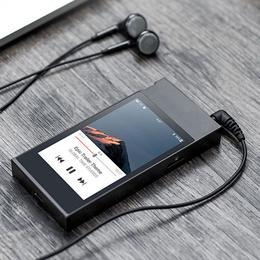
FiiO M7
Boasts an ES9018Q2C DAC, supports single-bit DSD format and LDAC codec for high-definition wireless sound broadcasting via Bluetooth iv.2. DAP equipped with 3.ii-inch 800х480 touchscreen and Samsung Exynos 7270 SoC. The internal storage capacity is two GB. Therefore, the M7 has support for microSD memory cards upwards to 512 GB.
Bank check Price
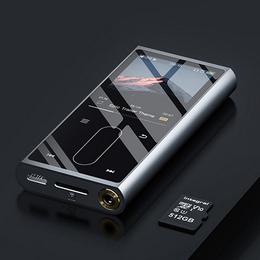
FiiO M3K
This one is a cheaper model with aluminium unibody case, front tempered glass with two-inch IPS display and a block of touch command buttons. FiiO M3K is equipped with AK4376A DAC, that supports up to 384kHz / 32bit for WAV files, 192kHz / 24bit for FLAC and DSD64. Player does non have internal retention, but supports microSD cards up to 512 GB.
Check Price
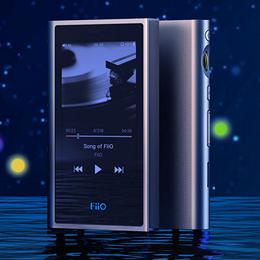
FiiO M9
A portable digital sound player with two DAC chips AK4490EN and Texas Instruments OPA1612 amplifier. FiiO M9 equipped with standard 3.5-mm jack, also every bit ii.5-mm balanced output jack. The histrion wireless connectivity: Wi-Fi with AirPlay and DLNA. And Bluetooth 4.two with back up of aptX Hd 24-bit, LDAC and HWA codecs. DAP uses customized Android vii.0 operating arrangement, has a iii.ii-inch IPS touchscreen, two GB of internal retentiveness and supports MicroSD upwardly to 2 TB.
Check Price
gonzalezcrigoithave.blogspot.com
Source: https://gagadget.com/en/fiio-x3-mark-iii/32226-fiio-x3-mark-iii-review-evolutionary-next-step-in-the-popular-hi-fi-players-line-up/

Post a Comment for "Fiio X3 Mark Iii Review Micro Sd Card"